

Hey fascinating sagers, welcome in. This week’s podcast I’m the guest on Michelle Adams podcast Michell Buck Books -Author Interviews for a special two part conversation. In Part 1, I joined Michelle as her guest to talk about the real story behind holistic health titles, and how I stay steady when the numbers try to hijack my mood.
In this part 2, we get more practical. I share my publishing strategy, why I’m testing digital first before print, how I use beta readers without drowning in feedback, and the simple low tech systems that keep me organized, including my Notes method and my crime show style book board. We also touch on plagiarism, NDAs, and protecting your work in the AI era.
Welcome
I want to take this opportunity to say 👋 hello and welcome to April Hamm and The Chickadee Feeder. Thank you for subscribing, honoured to have you here.
If you have not subscribed yet please do, I would love to help you shine your fascinating light and tame those symptoms beyond menopause. Hit the button, and I will see you on the other side.
Label To Table
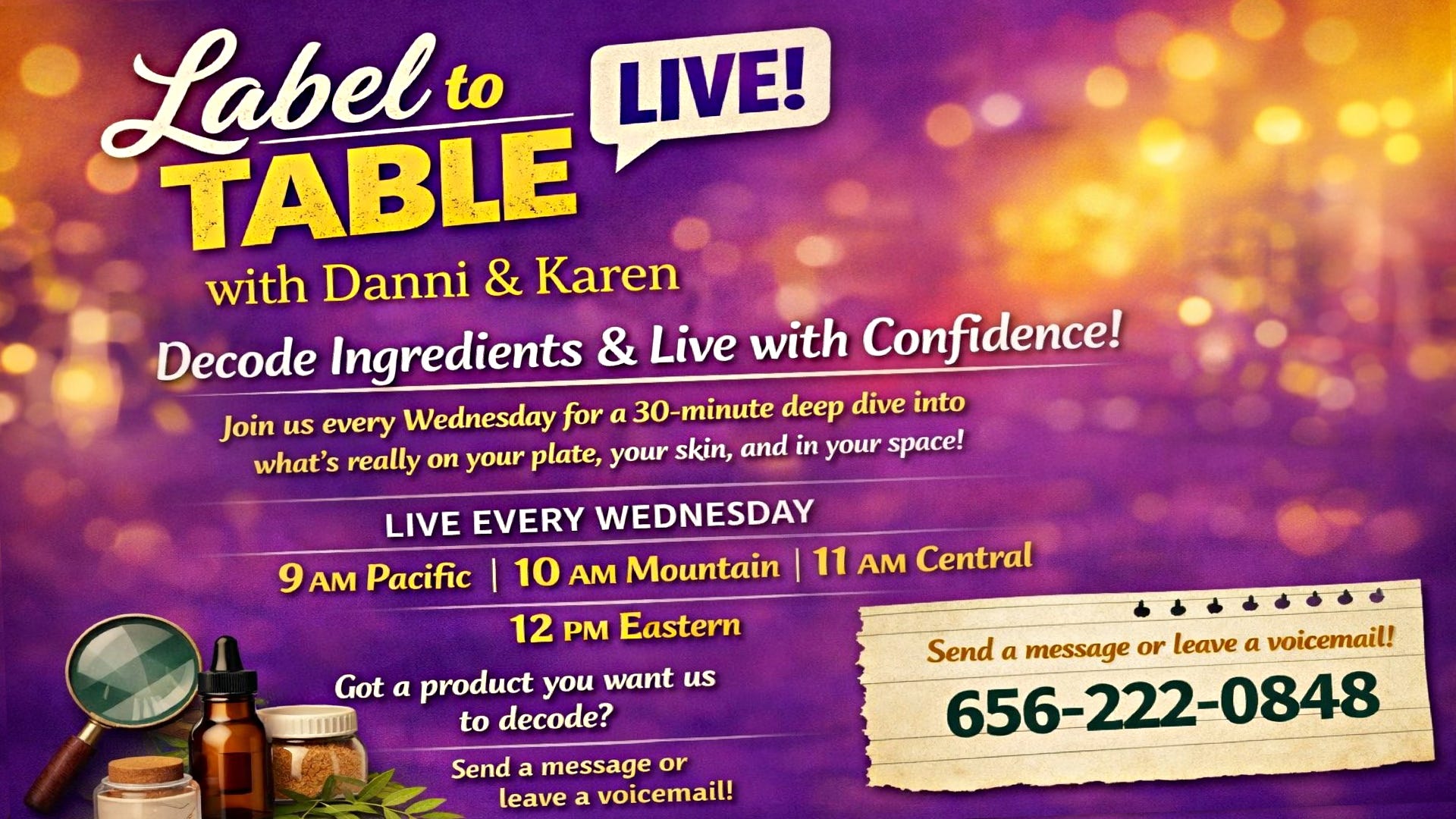
Join Holistic Nutritionist Danni Macfarland and myself live every Wednesday to decode the ingredients, read the fine print on what goes on your plate, your skin, and in your space, translate the science, and help you choose with confidence so you can sage with sass and grace every day life. You can join us on my Substack
Wednesdays
9 am pacific
10 am mountain
11 am central
12pm Eastern
Just log in to your Substack app or use the link in your email on Wednesdays. Hope you can join us.
P.s. …seriously, if you have a question you would like answered, please leave me a message on my dedicated podcast line (656) 222-0848 or message me. If I do not have the answer, I will find the expert who can.
Need to catch up? Here is Part 1

Show Notes
Quick reference: tools, apps, platforms mentioned
Hassan Osman, self publishing course, Write a Bestselling Book in 4 Weeks
Editing and clarity tools: Hemingway app for final clarity pass
Organization systems; Notes on iOS, folder system with one master idea note
Excel or Numbers spreadsheet for beta reader feedback comparisonCopyright registration through the US Copyright Office process described in general terms
Michelle asked about strategy, the real behind the scenes mechanics of getting a book out without losing your mind or your voice. And I told her something that surprised even me. I am planning to release my book digitally first, and hold the print version back for a while.
This came from a course I took with Hassan Osman. His whole angle is practical, clean, self publishing oriented, and very focused on getting the thing done. One of his suggestions stuck with me: do not rush into physical copies immediately. Give the digital version time to breathe in the real world. Let real readers bump into your blind spots so you can course correct before the final product is in print. Once it is printed you can’t hit edit. I thought this was sound advice.
Because here’s what happens when your work leaves your laptop and enters other people’s brains: they notice things. They will point out a typo. They will say, I love this, but you skipped the part I needed. Or, you explained this like I already know it, and I do not. If the book is digital, you can fix it without wasting a garage full of paperbacks that you now have to stare at like a pile of expensive regret.
Hassan’s recommendation was something like six months to a year. Michelle told me she would be too impatient to wait a whole year to release print, and I understood that in my bones. Most authors are not dying to delay the moment they can hold the book in their hands. I happen to be one of them. But I told her, I am going to try. And yes, I already know what happens next. The second you release digital, people ask, when is the paperback coming?
Michelle also shared something important from her own experience: she sells more paperbacks than ebooks. That had me second-guessing. Some genres and audiences are still very tactile. They want the book on the nightstand, not on a screen. So strategy is not one size fits all. But for me, with the type of book I am writing and the way I want to refine it, digital first feels like the smartest stress saving move. It might just be a shorter wait for the physical book.
What is energizing me right now and what keeps me from turning into a cranky gremlin.
Michelle asked what is energizing me right now. Not just the book, but the whole swirl of work and writing and Substack and everything else. The honest answer is that it changes daily. I am fueled by small things. I can watch a bug climb a tree and get fully invested, like it is an Olympic event. I am that kind of person.
But one consistent energy source for me is my travel writing. Planes, Trains, and RVing is where I go to recalibrate.
When I sit down to write it, I am reliving the adventure, even if it happened a couple of years ago. I dive into the history. I remember the odd little moments. I time travel back into myself. And I need that. Because if I do not take time out for myself, I get grumpy. Critical. Cynical. That is my personal warning light. When that tone shows up, I know I have drifted out of balance.
So I stop. I take a hike. I go write something else. I find a coffee shop, even though I do not drink coffee, sometimes I am presented with an array of tea varieties to try. Sometimes I can’t get the right coffee shop vibe, and I drive around and never set foot an any….but, I got out and in the process, I reset my nervous system. Sometimes that is the win.
Michelle talked about feeling disorganized, too many ideas, writing them down and forgetting where she wrote them down, the weirdness of running your own work when nobody is handing you a to do list. That is such a real modern problem. You are the boss and the employee and the janitor and the marketing team and the person who has to talk you off the ledge when things are overwhelming. So I shared what actually helps me stay on course to help tame my overwhelm-ness. My low tech secret weapon: one note, not forty seven
My favorite free tool is Notes on iOS.
I keep folders in Notes, and I keep my system almost aggressively simple. I have one folder for ideas, and inside that folder there is only one note and just my ideas in there. Not a dozen notes. Not a new note for every shiny thought. Just the one.
Every time I get an idea, I drop it into that one note. Because if I create lots of separate notes, I will confuse myself. I will squirrel my acorns everywhere, then winter shows up and I cannot find a single one, even though I know I hid them all over the forest of my own brain.
I also have a folder for things to podcast or write about. And inside that, instead of creating a hundred separate notes, I use headings within one note. Nutrition. Health. Somatic work. Topics. Threads. I can scan it, feel what pulls me, and pick what is ready. Sometimes I open my own notes and think, why did you write that? But sometimes something pops off the screen like, yes, this. This is the next piece.
I also told Michelle I used to be the person with Evernote, all the shiny tools, all the systems. And I deleted it. I did not even migrate my content. I cancelled and moved on because it became information overload. Same with my email. I have reached a season of life where I want less noise, not more.
The crime show board that saved my book
Then Michelle asked about my board. Because I mentioned it, and it is honestly one of the best things I did when I got stuck. I am visual person. And with my book being on a laptop, I hit a wall where I could not see the structure anymore. The scrolling was too much. Pages upon pages on a screen starts to feel like standing at the bottom of a mountain made of digital white paper. My brain just gets confused. I was becoming overwhelmed and wanted to shut down.
So I went and bought a physical board. Across the top, I wrote out my chapters. Under each chapter, I put sticky notes for subheadings and sections. It was messy, imperfect, and exactly what I needed. Suddenly, I could see the whole book at once.
I also wrote myself a little chapter checklist to keep my flow consistent. Story. Study. Symptoms. Build into the next chapter. Conclusion. Quick reference. Checklist. I wanted to make sure there was flow from chapter-to-chapter. It was also about giving my brain rails to run on when my motivation tried to vanish. The board did something else too: it revealed where my chapters were too long, and where others were too short. It made imbalance visible. I could literally see, okay, that chapter needs to split into two. Or that section belongs elsewhere.
Michelle pointed out that it reminded her of crime shows where they post the wall of evidence. The string connecting clues. I am not saying I felt like a detective, but I also am not saying I did not. The point is, it kept me from quitting. Because when I get stuck, my default survival response can shut me down. I am working on that. I refuse to use that as cop out. I refuse to let one stuck moment become a full stop story.
So instead, I ask: what is another way I can keep moving forward that fits how I actually function? I used to give in and be victimized by own circumstances. This is why I have read so many biographies of successful people. What I have found is that they do not give up, they do not give in. Instead they look for another way to solve the problem. I loved it. I have incorporated this into my every day. When I feel overwhelmed and ready to shut down—I stop and ask: what is another way I can keep moving forward?
Beta readers, the spreadsheet that saved my sanity, and the one reader who almost derailed everything
One of the books I read, Write Useful Books: A modern approach to designing and refining recommendable nonfiction by Rob Fitzpatrick, suggested beta readers. I had never heard of the concept, and I was thinking, there is no way anyone is going to want to read my rough copy. But, to my surprise there were a lot who wanted to.
This intrigued Michelle to which she asked how many when and how to handle feedback without drowning? Here is what I did. I brought in beta readers twice.
The first time was early, when I had five chapters. That was suggested by the author to see if it is worthy of finishing the book. I did that because I genuinely was not sure if I was headed in the right direction. That first wave of beta readers gave me something priceless: confirmation that I was on track and motivation to keep writing. I think I had about fifteen beta readers which I thought was too much, however, some never followed through, so it landed closer to ten which I found was perfect for some real measurable feedback.
The second time was after I finished the full book. I wanted to know if the entire arc made sense now that everything was in place. That time, I had around ten beta readers again that followed through. So, I believe get as many as you can, because like a party where everyone says yes, only a third show up. And here is the key part: I liked the second beta group even more because I did not know most of them. That mattered because they are reading from a clean perspective a more objective lens and that is gold.
Now, the feedback itself can get overwhelming. So I created a simple spreadsheet. Down the side, I listed the questions I wanted answered. Across the top, I put the beta readers’ names. Then I filled in their responses so I could compare answers in one place instead of juggling ten separate email threads and losing my mind. Was it work to set up? Yes. Was it worth it? Absolutely.
I also learned something the hard way: not every beta reader is your audience. In my first beta reader round, the very first feedback I got back, this one person went off on me. Told me I wasted her time. It hit me so hard I almost stopped writing the book. It rattled me to my core. I decided to just wait until I got the other beat readers feedback before my next step however, I was rally driven by anxiety that week.
Then, to add a little glitter to the chaos, another beta reader asked me to read her manuscript in return. That moment taught me something. Sometimes people are not giving feedback. They are handing you a tit-for-tat situation. If I am in the middle of a book, surely she could understand that I am not in a position to be reading hers. I guess I should hav suggested beta readers. But I didn’t I was too shocked. So, I learned to be a little more clear about what I am needing when asking for Beta readers.
Thankfully, the second wave of beta readers was the opposite. They laughed. They loved it. One said something like, I am peeing my pants, you need to have Depends for this book. And I thought, okay. There are my people. I felt back on horse again.
I learned, you cannot build your work around the person who is not your audience. You build it for the reader who feels seen, helped, and entertained in the way you intended.
Ten days, incognito mode, and the last messy section of the book
At one point, Michelle asked where I am in the process and when the book is coming out.
I told her I had ten days to myself and I was going full incognito. No clients, except one. Just me and the manuscript and whatever snack food tries to bribe me into procrastination.
At that stage, I had already been through beta readers. What was left was running the book through a plagiarism checker, then doing a final pass through something like Hemingway for clarity and cleanup.
And I admitted I am stuck on one section: supplements. I did not want to include supplements because supplements can turn into a whole universe of information. It risks becoming clinical, and it is hard to make a clinical list feel human. My beta readers told me that part felt too clinical. And they were not wrong.
So I am deciding what to do with it. I might turn it into a separate download on my website. I might make it a compendium. I might keep a shorter version in the book and offer the deeper list elsewhere. That is the advantage of digital first. You can adjust. You can test. You can evolve without freezing your book into a format you resent.
UPDATE (Jan 2026) — I had a hiccup in my manuscript and somehow deleted the raw version and only had a backup. This translates into a lot of missing information. I spent my winter holidays writing and editing and adding over the two weeks. It really set me back. I can not believe that happened. SO, I am almost done once again! And the next step.. fact checking, plagiarism and the book cover.
Is there a risk of someone stealing your content?
Toward the end of the live conversation, an audience question came in: is there a risk of someone stealing your content? Yes. Anyone can plagiarize a book. It happens constantly. While you cannot fully prevent someone from trying, you can protect yourself legally. In the United States, you can register your copyright. Technically, your work is protected the moment you create it, but formal registration strengthens your legal position if you ever need to pursue action.
Let’s talk about a very current reality in the AI era, in fact these fights are happening publicly now with Anthropic and Claude being sued over the use of authors’ books. That is going to happen for a very a long time. If you care about protecting your work, formal copyright registration is becoming less optional and more foundational. It is a great way to protect your book form any type of entity.
And, last minute I thought about copyright with beta readers. It occurred to me that I was sending my manuscript to people, and I wanted a little layer of protection. So I used a simple NDA approach. I had them agree that if they replied to my email, they were agreeing to the NDA terms, and then I would send the manuscript. Everyone complied. I have learned after years of having my work stolen in different ways that an NDA and copyright can hep in protecting my property. Not always though. But, I do not get upset about it any more because I have realized they can never produce it they way you do.
They can steal your words. They cannot steal your authenticity.
I have had presentations, books contents stolen over the years. And, what I have learned is that they cannot deliver it the way you deliver it. They cannot carry your lived experience. They cannot replicate your voice in the body. And they never feel confident enough to portray a strong voice. They can’t. The mere vibration of what they did makes the lie weak, thus they cannot be strong in their presentation. That is a vibrational law.
That does not mean you roll over if someone profits off your work. If someone makes millions off my stolen content, I will come after my piece of that pie. I refuse to let the fear of theft keep me silent. I even joked that nobody is going to plagiarize my personal stories in my book. No one is stealing my crime scene saga of my last period ever, because that story is mine in a way only my body could write.
We also talked about how this shows up on platforms like YouTube. I shared that I have had videos copied word for word, and that enforcement can feel stacked against you unless you have certain levels of traction. That reality is frustrating. But again, the voice is the thing. It is how you hold the room. That cannot be duplicated with copy and paste.
Michelle brought up a current example that had her fired up: the Mel Robbins “Let Them” situation, where the core concept was originally a poem by another woman and the credit piece was a problem. We did not do a deep dive, but we named the pattern. It happens. And it is why creators are talking more about credit, protection, and ethics right now.
That wraps up Part 2 of my guest appearance on Michelle Adams’s podcast. I’m grateful for the space Michelle creates to talk honestly about writing, publishing, and staying grounded while navigating the maze of self publishing. I also helps you know a little bit more about me in the process.
Be sure to check out Michelle’s publication, Michelle Buck Books, for all things related to supporting authors through the self publishing process. And don’t miss her podcast, Michelle Buck Books Author Interviews, where she shares self publishing tips and tutorials, author interviews, writing and marketing guidance, and everything in between.
Thank you for listening in. I’m Karen Langston, holistic nutritionist and hypnotist. Stay well, and until next time, question the norm, trust your wisdom, elegantly and unapologetically roar. And most of all, Lady, keep being fascinating and sage with sass and grace in everyday life. I will see you soon.
Thanks for watching, listening or reading. See you soon
~Karen


